
Need earthworks? Call now →
Brisbane Earthmoving Contractors — illustrative Brisbane earthworks scene

About us

Brisbane Earthmoving Contractors

A Brisbane team combining experienced operators, practical site planning and a modern fleet to deliver the groundwork every successful project depends on.

Groundwork across Brisbane

Civil Earthworks contractors in Brisbane

Earthworks set the pace for everything that follows. That is why we approach each site as a whole system—not just a quantity of soil to move.

We plan access, levels, material handling, drainage and trade sequencing before we begin. It is a straightforward way to protect the program, reduce rework and leave a cleaner result.

Our capability spans residential blocks, rural projects, commercial preparation and civil earthworks across the Brisbane metropolitan area.

That is the standard behind every job we take on as a Brisbane Earthwork Contractor.

01Site review
and access
02Clear written
scope
03Documented
quote
YOUR NEXT PROJECT

Get a free estimate

Tell us about the job and we’ll come back with a quote.

Choose a serviceSite PreparationSite CutsBuilding PadsTight Access ExcavationSediment ControlLand ClearingVegetation RemovalGrass RemovalDemolition (Residential/Commercial)Rock Breaking / Rock RemovalRetaining WallsDriveway PreparationSite CleansFinal Trim LandscapingDomestic Tree RemovalExcavationBulk ExcavationFooting ExcavationBasement ExcavationRural ExcavationDam Construction / Dam DiggingPool DigsStormwater DrainageAg Pipe Drainage InstallationDrainage SolutionsSoakwell InstallationSump Pit InstallationSewer Line ExcavationTrenchingTrenching for Power/NBN/CablingCulvert InstallationRoad Base PreparationConcrete PreparationConcrete RemovalLevelling & GradingSite RegradingTopsoil Supply and SpreadingSand Supply and SpreadingCrossover/Verge WorksBobcat HireExcavator HireTipper Truck ServicesMini Digger ServicesAuger Drilling / Post Hole DrillingLifting NeedsLifting CapabilitiesiDig TechnologyEarthworksResidential EarthworksCommercial EarthworksCivil Earthworks (subdivision-scale)Council-Compliant EarthworksErosion Control
Site Preparation & Groundwork
Excavation Sub-Services
Drainage & Water Management
Civil / Utility Works
Specialty / Equipment-Based
Commercial / Compliance
Choose an area sizeUnder 100 m²100–500 m²500–1,000 m²Over 1,000 m²Not sure yet
Choose a start timeIt's urgent (in 48 hours)In a few weeksIn a few monthsPlanning and budgeting

Your details are used only to respond to your project enquiry.

The human side of earthmoving

Start Working with Bulk Earthworks in Brisbane

Earthworks decisions become easier when the outcome is clear. Our role is to connect what you want to build with the practical constraints of the ground: its type, its slope, how water moves across it and how a machine can reach it. That connection is what turns a drawing into a sequence of work that can actually be carried out on a Brisbane block.

Talk through your project
  1. 01

    Tell us what the site needs to become

    A useful enquiry describes the result: a level platform for a home, a clear run for a delivery truck, or a back garden that drains after a summer storm. Once the outcome is clear, the conversation about machines, materials and sequence has a purpose, and the quote can be built around what you actually need rather than a generic task list.

  2. 02

    Show the parts a drawing cannot explain

    Photos of the street approach, the gate or side passage, neighbouring fences and the existing ground add context that a plan rarely shows. Wide shots and close-ups both help. If important details such as levels, soft ground or overhead clearance remain uncertain, a site review is the practical way to settle them before a price is fixed.

  3. 03

    Leave decisions somewhere you can refer to

    The written scope records what is included, what has been assumed about the ground and access, and what still needs confirmation from a builder, engineer or authority. When the site turns out differently from the plan, both sides have the same document to refer to, which keeps the discussion about the job instead of about memory.

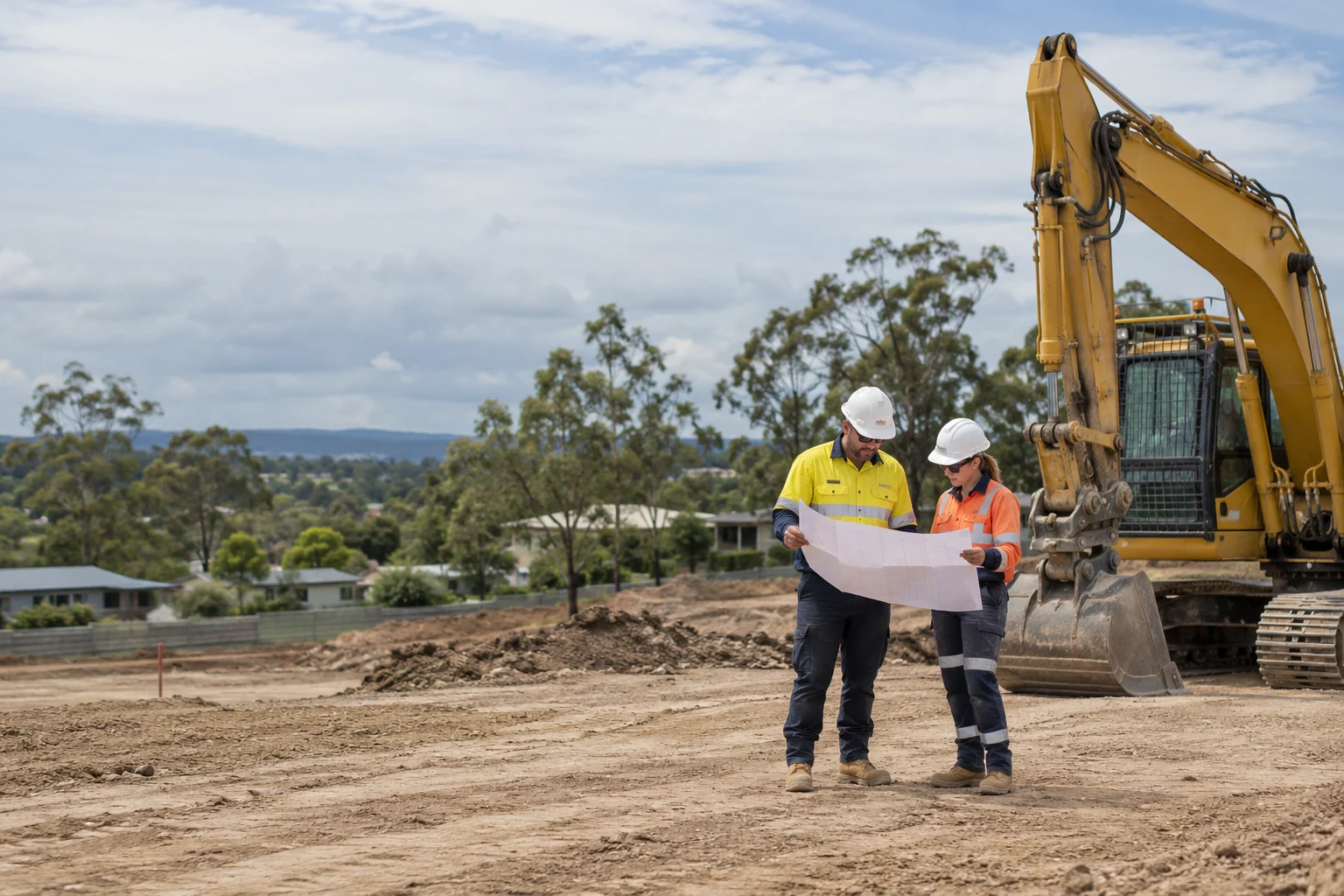
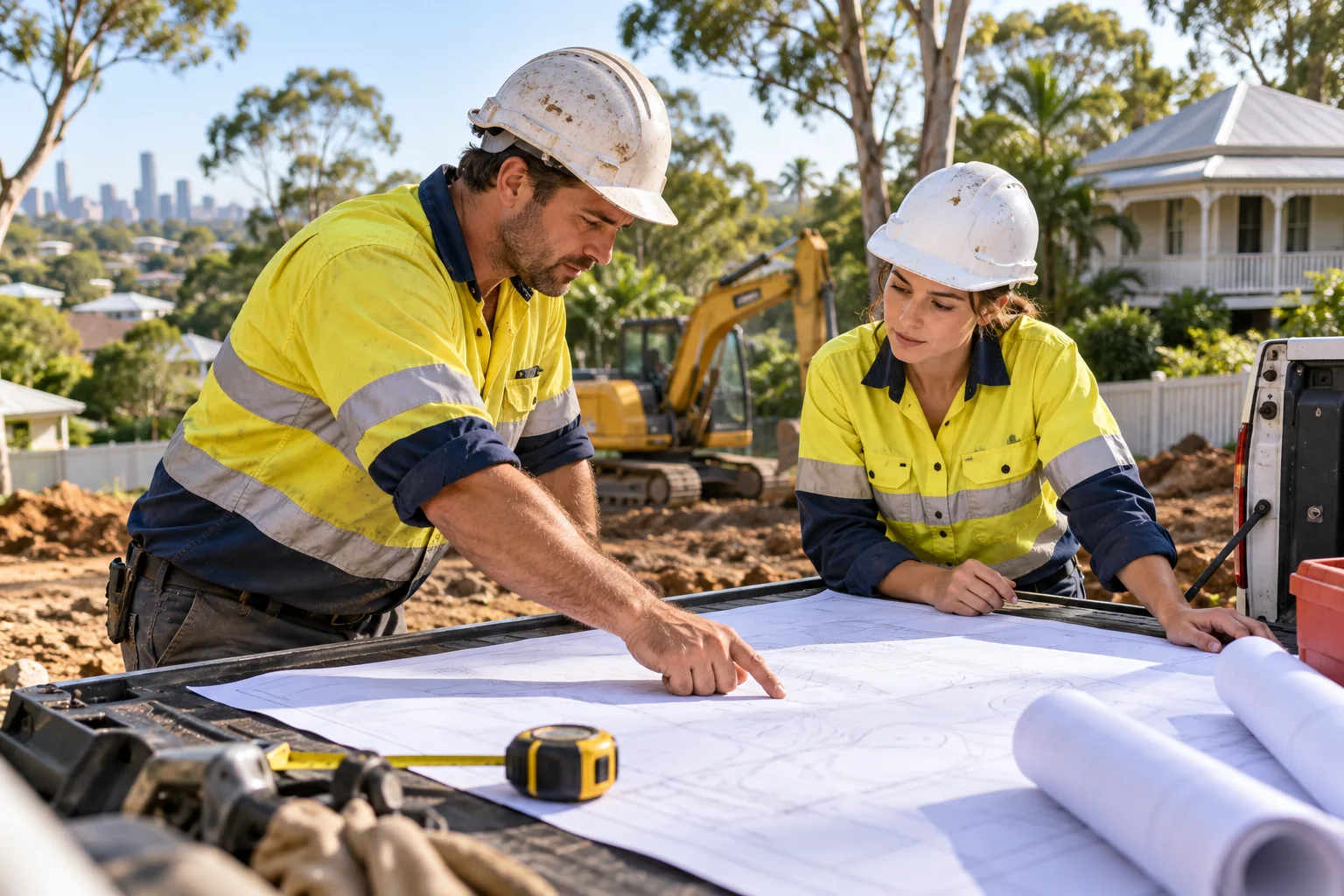
Illustrative site coordinators discussing an earthworks plan in a Brisbane setting

Working relationship

Talk to our Civil earthworks Experts in Brisbane

You should know which decisions belong to the earthworks scope and which need input from your builder, designer, installer or the relevant authority. Levels and set-out usually come from the project documents, while access, plant, spoil and finish are decided in the earthworks discussion.

We keep those interfaces visible in the discussion. That is more useful than treating every unknown as something to sort out once machinery arrives, when a delay costs the most and the people who could answer the question are not on site.

How responsibility is shared

Earthworks in Brisbane: How to Get Started

A well-defined project makes room for the right expertise at the right time. These relationships help an earthworks scope remain practical and traceable, and they show who to ask when a question comes up part-way through the job.

01 / Direction

Your project team sets the destination

Builders, designers and survey information establish the intended footprint, levels and structural requirements. Sharing the current drawings, rather than an earlier revision, helps avoid conflicting references and keeps the earthworks aligned with what the next trade expects to find.

Building platform preparation
02 / Delivery

The earthworks scope defines the movement

Machine access, excavation, material handling and the agreed finish turn that information into a workable sequence on the property. This is where practical judgement about ground conditions, weather and neighbouring surfaces shapes how the work is staged and protected.

Integrated groundwork
03 / Continuity

The following trade receives a clear interface

Concrete, drainage or landscape work can proceed from a defined condition rather than from guesswork. Remaining tasks, retained access and any review points should be understood at handover so the next contractor knows exactly what they are starting from.

Explore the finishes

When the ground surprises us

Pause, explain, agree the next move.

Unexpected rock, buried fill, a soft pocket of ground or a changed instruction can alter a job, particularly on older Brisbane blocks where past work is undocumented. The useful response is to stop, make the difference visible with photos and measurements, and agree what it means for method, time and scope before extending the work.

What makes a variation understandable?

A description of the changed condition, the proposed response and the effect on the agreed scope, ideally supported by a photo or measurement taken at the time. Keeping the discussion connected to the actual site, rather than an unexplained extra charge, lets you make an informed decision before the work continues.

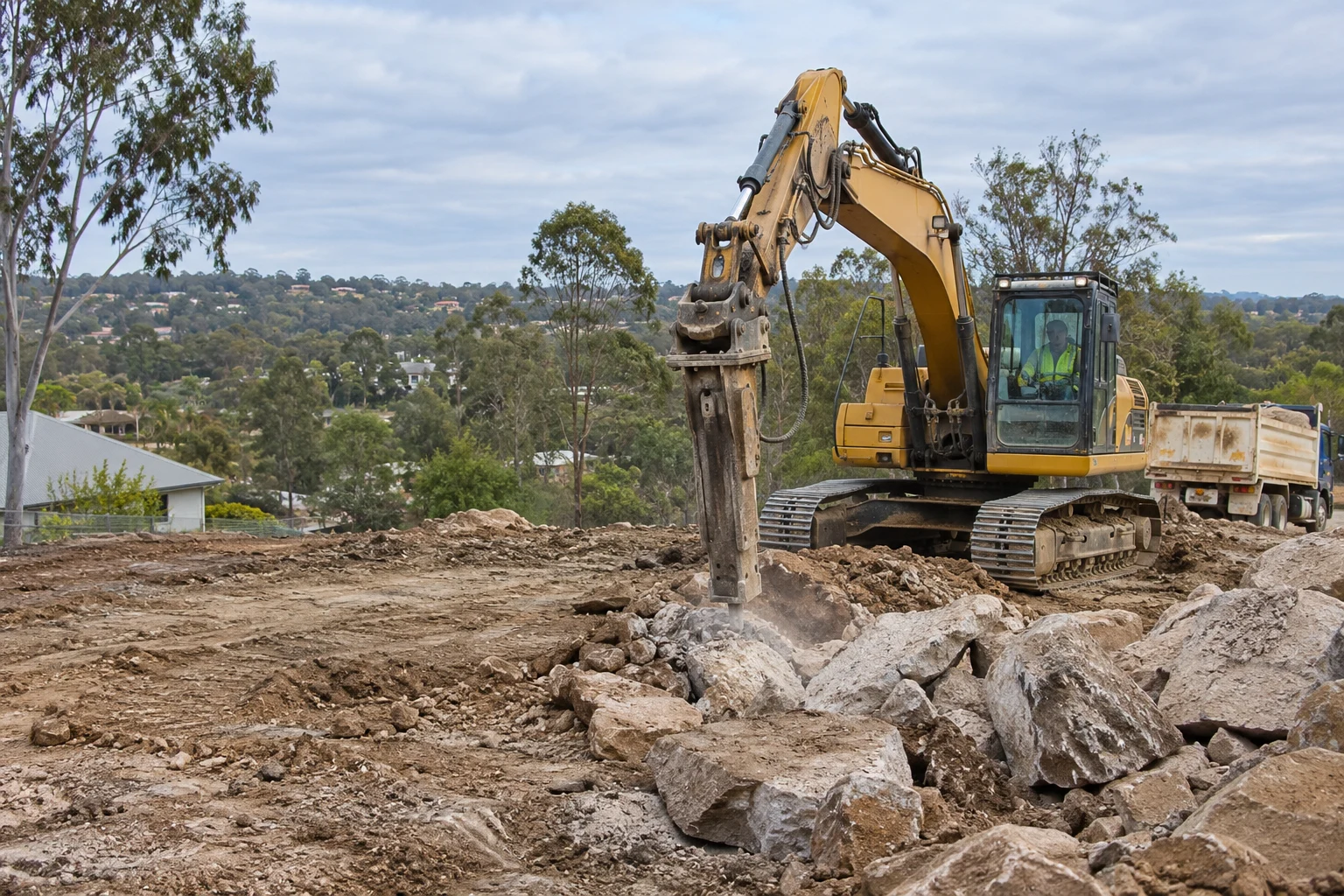
Illustrative rock excavation showing a material change in the ground

Practical standards, visible behaviours

Six things to look for in an earthworks working relationship.

Work zones people can understand

Agree where machines operate, where they park and how other people, including occupants, neighbours and following trades, move around the site while plant is working. A shared picture of the work zone is a simple way to keep everyone clear of moving equipment.

A price with its assumptions attached

Keep quantities, inclusions and exclusions visible in the written response to your enquiry, along with the assumptions about ground and access that sit behind the price. That makes quotes comparable and shows where a variation could arise.

Retained property treated deliberately

Identify fences, paving, garden beds, kerbs and access features that remain before choosing the machine route. Deciding what must be protected, and how, is easier before a loaded truck or excavator is already at the gate.

Plant selected for the actual brief

Confirm the machine, attachment and working envelope for the task rather than relying on a generic fleet description. Width, reach, ground bearing and the finish required all influence whether a machine suits the job.

Material destinations decided early

Separate suitable reuse from material intended for collection and disposal, and decide where each will go before digging starts. Clear destinations keep stockpiles from blocking access and keep the quote aligned with what actually happens to the soil.

Documents that reach the work area

Make the relevant drawings, levels and instructions available to the people completing the task, not just the person who wrote the quote. Work done to the current documents is far easier to hand over and check.

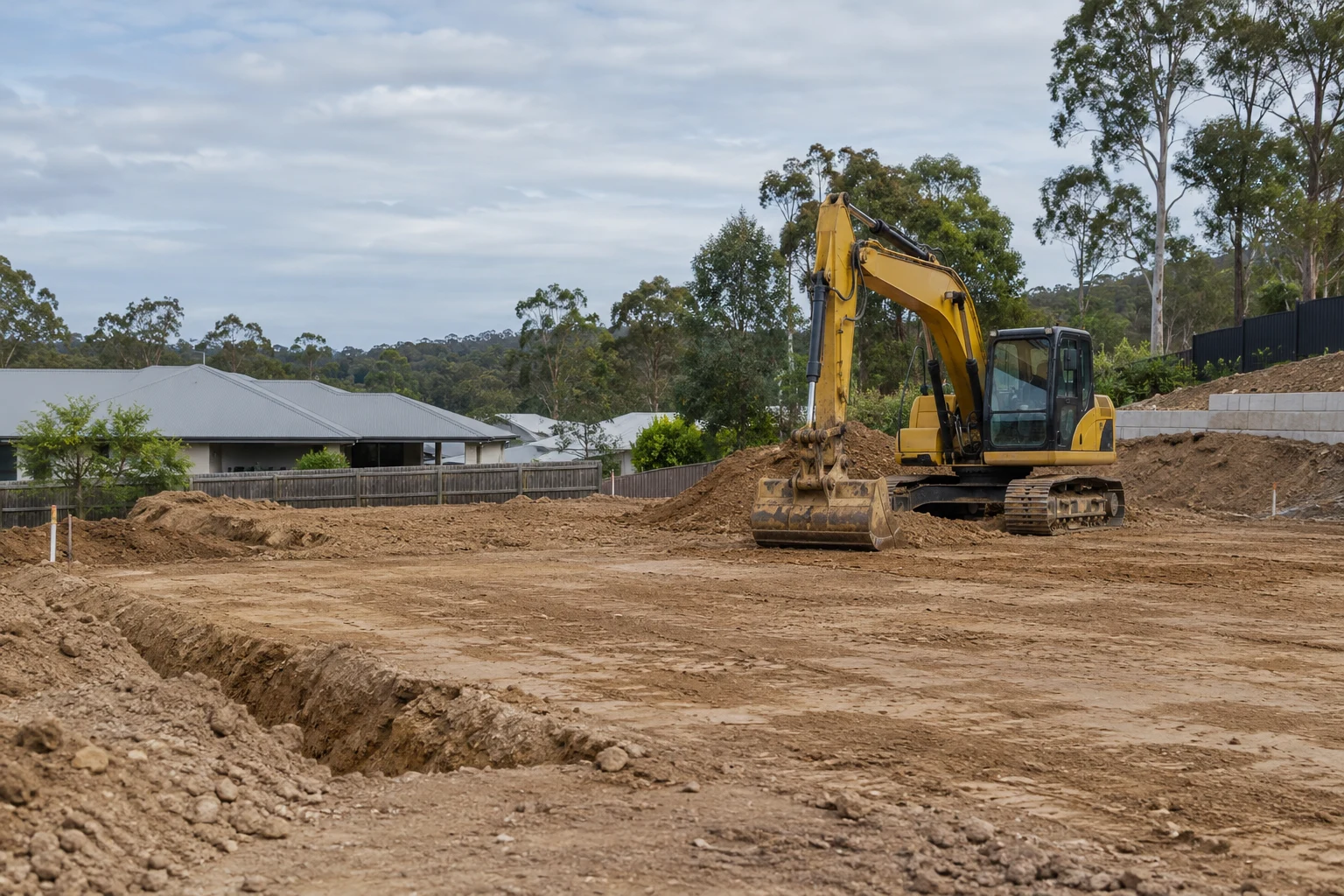
Illustrative residential earthworks in a Brisbane neighbourhood

Different clients, different priorities

The person commissioning the work changes the conversation.

  • A homeowner changing one outdoor area

    Pool digs, backyard drainage and driveway preparation need to fit an established property, with the house, garden and neighbours already in place. Access width, protection of existing surfaces and where the spoil goes usually matter more than the dig itself.

    Relevant service
  • A builder coordinating the next trade

    Formation and footing work need a clear level reference and an agreed readiness date so the following trade is not waiting. Shared drawings and a defined handover condition keep pads, footings and slabs moving in sequence.

    Relevant service
  • An acreage owner improving access

    Tracks, crossings and rural platforms need consideration of distance, changing terrain and seasonal ground conditions. Machine access across the property, and where material can be placed, shape both the method and the program.

    Relevant service
  • A site manager releasing staged areas

    Commercial and civil scopes need clear work-zone boundaries, coordination with other trades and a record of what is ready to release. Staged handovers are easier to manage when each area has a defined condition.

    Relevant service

Before choosing your contractor

Frequently Asked Questions

Alongside the specific job, confirm the information and responsibilities needed to assess it. A few clear answers at the start save time later and make the first quote more accurate.

Can the first discussion happen from photos and plans?

Those are useful starting points, and many straightforward jobs can be described from them. Restricted access, unclear levels, uncertain ground or a complex scope may still call for a site review before the work can be defined and priced with confidence.

How do we confirm that the property is in the service area?

Include the Brisbane suburb or property location in the enquiry so availability can be checked against the actual address. Rural or more distant work needs its own discussion about access, travel and scheduling.

Who checks approvals and underground-service information?

Assign those responsibilities before mobilisation and write them down. The relevant requirements depend on the property, the proposed work and the responsible council, authority or utility owner, so confirm what applies to your site rather than assuming.

What should remain clear when the machinery leaves?

The completed area and its levels, the condition of retained access and neighbouring surfaces, the material left on site and any tasks still waiting for another trade. A short walk-through at the end makes those points easy to confirm.